In November last year, I got feedback from my lead designer that stopped me mid-sentence. He told me that while it was cool that I dove into building an internal hackathon management tool, I should also think about helping other team members achieve their goals. He was right. I'd spent weeks heads-down on something I found interesting while my team needed a different version of me.
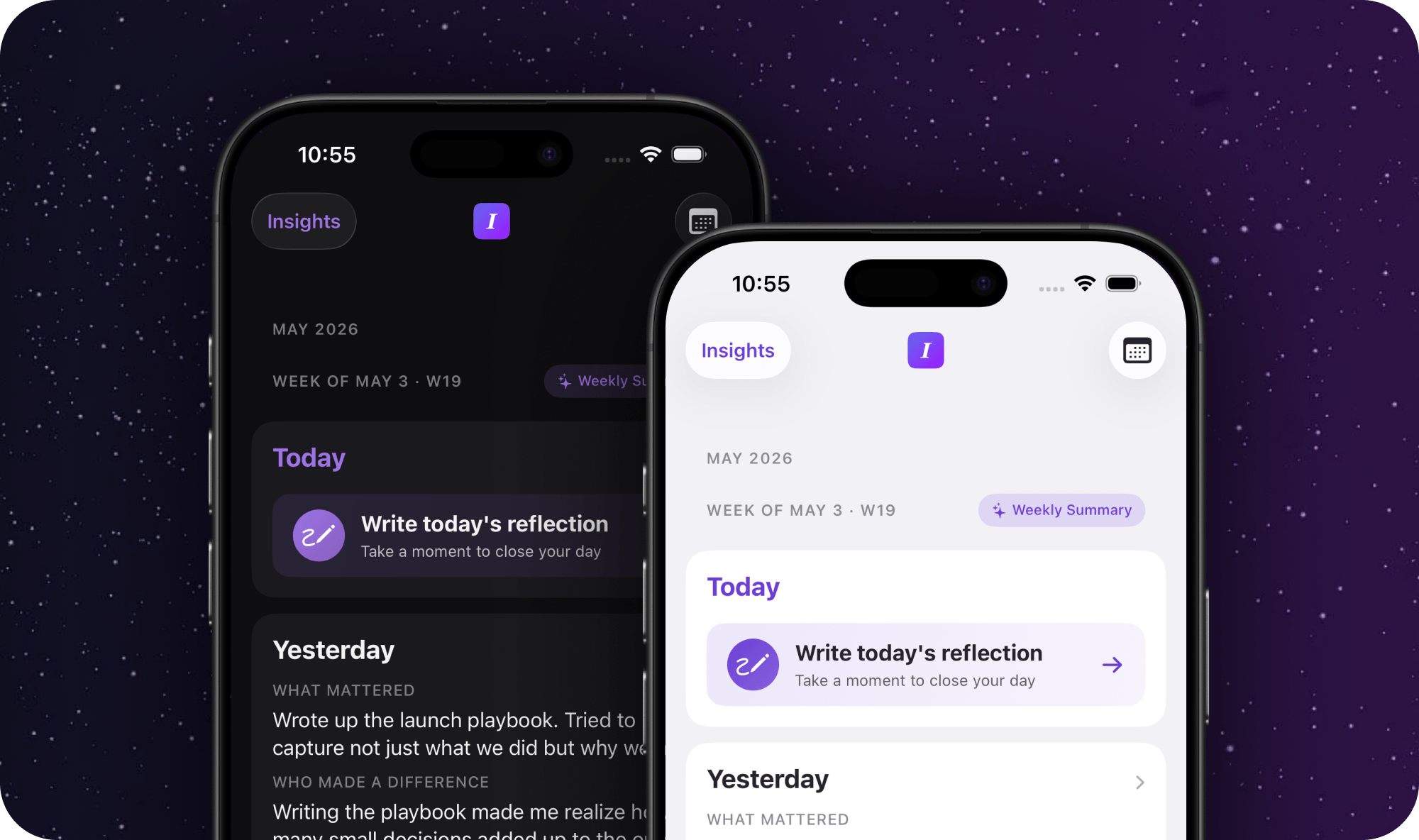
That feedback didn't land all at once. It sat with me for months. I started journaling daily in Intura, the app I built for exactly this kind of reflection, answering the same three questions every evening: what mattered, who mattered, what's still on my mind. I wasn't looking for a framework. I was just trying to get better at noticing what I was actually doing as a leader versus what I thought I was doing.
Three months of entries, one pattern
Somewhere around February, after about three months of daily entries, I used the chat feature in Intura to ask my AI coach a direct question: how would you describe my leadership style based on everything I've written?
I'd told it that my approach as a design director involves getting my hands dirty. That I believe successful managers don't only guide people but also do. The coach reflected that back, but with something I hadn't articulated myself. It told me it could see three distinct modes in my entries, and that this wasn't something it could map to an existing framework in leadership literature. This was my personal operating system.
Explorer. Guide. Enabler.
Explorer
Hands-on. Build. Prove it out.
Guide
Set direction. Let them drive.
Enabler
Unblock. Protect. Get out of the way.
What the three modes look like in practice
As an Explorer, I'm hands-on. Building things myself to prove something out or unblock the team. Recently that meant setting up a local environment for our point-of-sale app to diagnose rendering issues that our retail partners kept hitting. Nobody else had the context, so I went in.
In Guide mode, I set direction but don't build. For our core checkout workflows, I defined the reliability standard we needed to hit, then let the team figure out how to get there. My job was to be clear about the destination, not to drive.
As an Enabler, I get out of the way. Unblock things, fight for resources, protect the team's space. That meant advocating for AI initiatives to improve how customers get reliable answers quickly. Not doing the work. Making sure the people doing the work had what they needed.
The problem wasn't the modes
Looking back at November, there was nothing wrong with exploring. The problem was that I was only exploring. For weeks. Without telling anyone why I was deep in one project and hands-off on another. My team saw the pattern but had no explanation for it.
Research on role ambiguity by Rizzo, House, and Lirtzman (1970, later meta-analyzed by Tubre and Collins in the Journal of Management, 2000) consistently shows that unclear expectations from managers correlate with lower team performance and higher stress. My team wasn't stressed because I was building a hackathon tool. They were stressed because they couldn't predict what kind of manager they'd get on any given day.
Naming it changed everything
My AI coach suggested I share the framework with my team. Not as a presentation. Just in a conversation. Here's how I operate. Here are the three modes. Here's which one I'm in right now on each project.
When I told them, the reaction wasn't surprise. It was relief. They said they'd already noticed the pattern but never had words for it. One designer told me she'd been confused for months about why I was so involved in some projects and completely absent from others.
But the real shift came from something the coach suggested next: let your team request which mode they need from you. That turned it from a self-awareness exercise into a two-way tool. Now a designer can say "I need you in Explorer mode on this, I'm stuck" or "I've got this, just enable me." That conversation would never have happened if the modes didn't have names.
How I use this every week
I plan my week through these three categories now. Every project gets a mode assignment, and I check whether the balance feels right. Too much exploring means I'm probably neglecting my team. Too much enabling might mean I'm avoiding hard problems that need my hands on them.
I also report to my boss in this format. Every 1:1, I come with an agenda structured around Explorer, Guide, and Enabler. What I'm building, what I'm directing, what I'm unblocking. Plus a fourth section I call Open Loops for things that don't fit the pattern. It gives him a clear picture of how I'm spending my time without me having to narrate every decision.
This framework is personal
I want to be honest about something. This isn't a universal leadership model. It's not Situational Leadership (Hersey and Blanchard, 1969) or any other established theory. It emerged from my specific entries, my specific team, my specific tendencies. Your version might have completely different modes.
That's actually the point. Blanchard and Hersey's model tells you to adapt based on your direct report's readiness level. Goleman's six leadership styles (Harvard Business Review, 2000) categorize how leaders influence others. Those are useful. But they describe general patterns across many leaders. What I found through journaling was the pattern specific to me.
The value wasn't in the labels. It was in the three months of daily entries that made the labels visible. Without the written record, I'd still be switching modes without noticing, and my team would still be guessing.
How to find your own operating system
You don't need to journal for three months to start seeing patterns. But you do need to write things down. Memory rewrites your day before you've even left the office. Research on the Ebbinghaus forgetting curve, replicated by Murre and Dros in a 2015 PLOS ONE study, shows that people forget roughly 70% of new information within 24 hours. Your mental model of "how I lead" is built on a fraction of what actually happened.
Start with the questions. What mattered today? Who mattered? What's still on your mind? Answer them honestly for a few weeks. Then look back and ask yourself: what patterns do I see? Where am I spending my energy? What mode am I in when things go well, and what mode am I in when they don't?
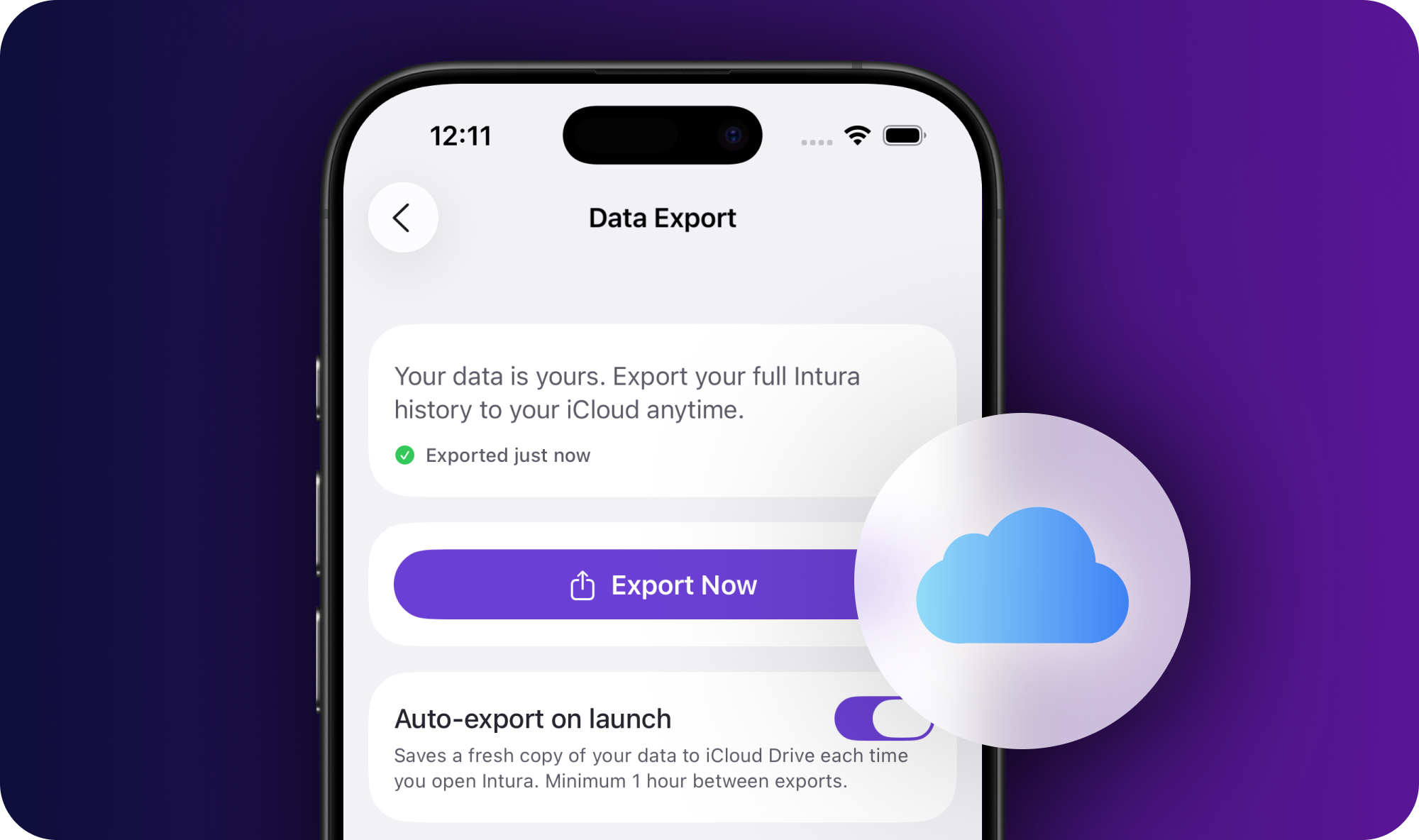
Intura is what I use for this. I built it because no other journaling app asked the right questions for managers. Daily prompts, AI that reads your entries and surfaces patterns you'd miss, everything on-device and in personal iCloud. The coach conversation that surfaced Explorer, Guide, Enabler wouldn't have happened without months of entries to draw from.
That feedback in November, the one about helping my team instead of just building things I found interesting? It took three months of journaling to understand what my lead designer saw in a single conversation. He noticed the imbalance instantly. I needed a written record and an AI coach to catch up. The framework didn't make me a better leader overnight. It just made me more honest about which version of me my team was getting on any given day.